

Business Field

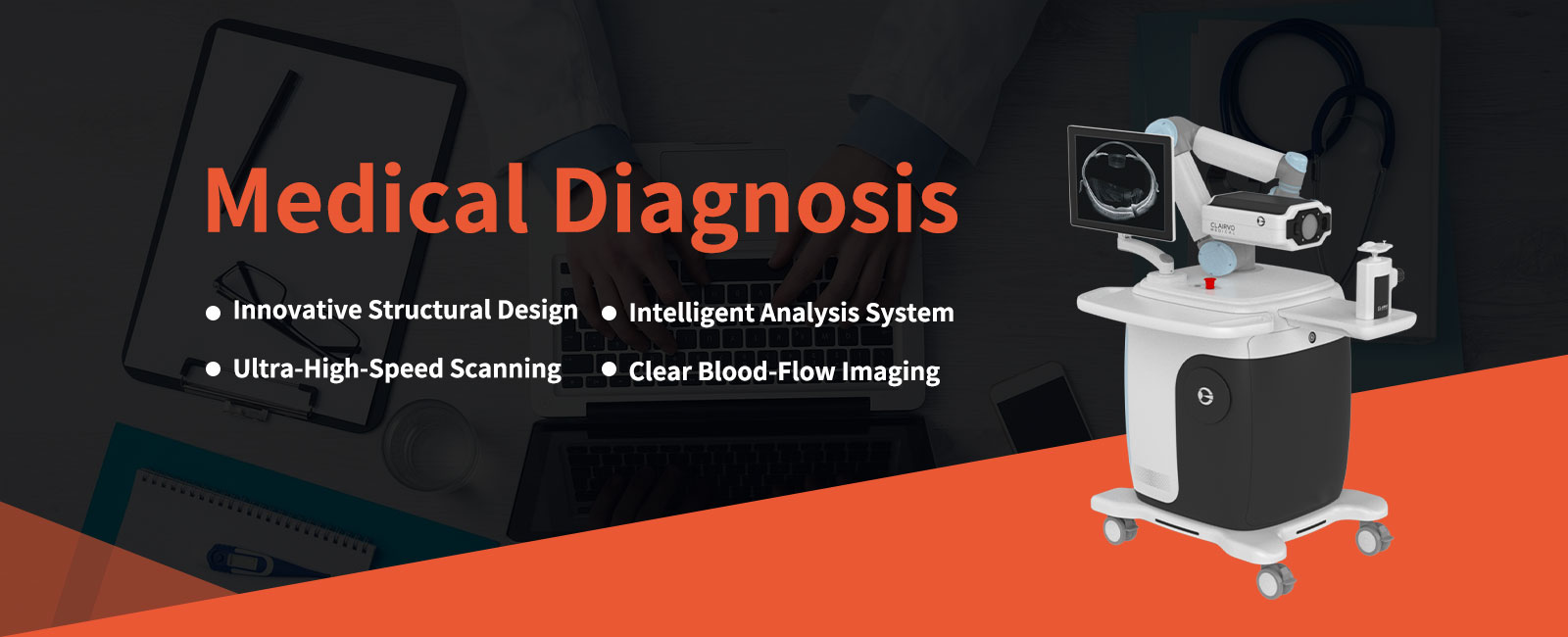
Medical Diagnosis
Medical diagnostic OCT device is a high-resolution imaging technology based on near-infrared light, mainly used for non-invasive and radiation-free in vivo tissue tomography, and widely applied in ophthalmology, dermatology and other fields.

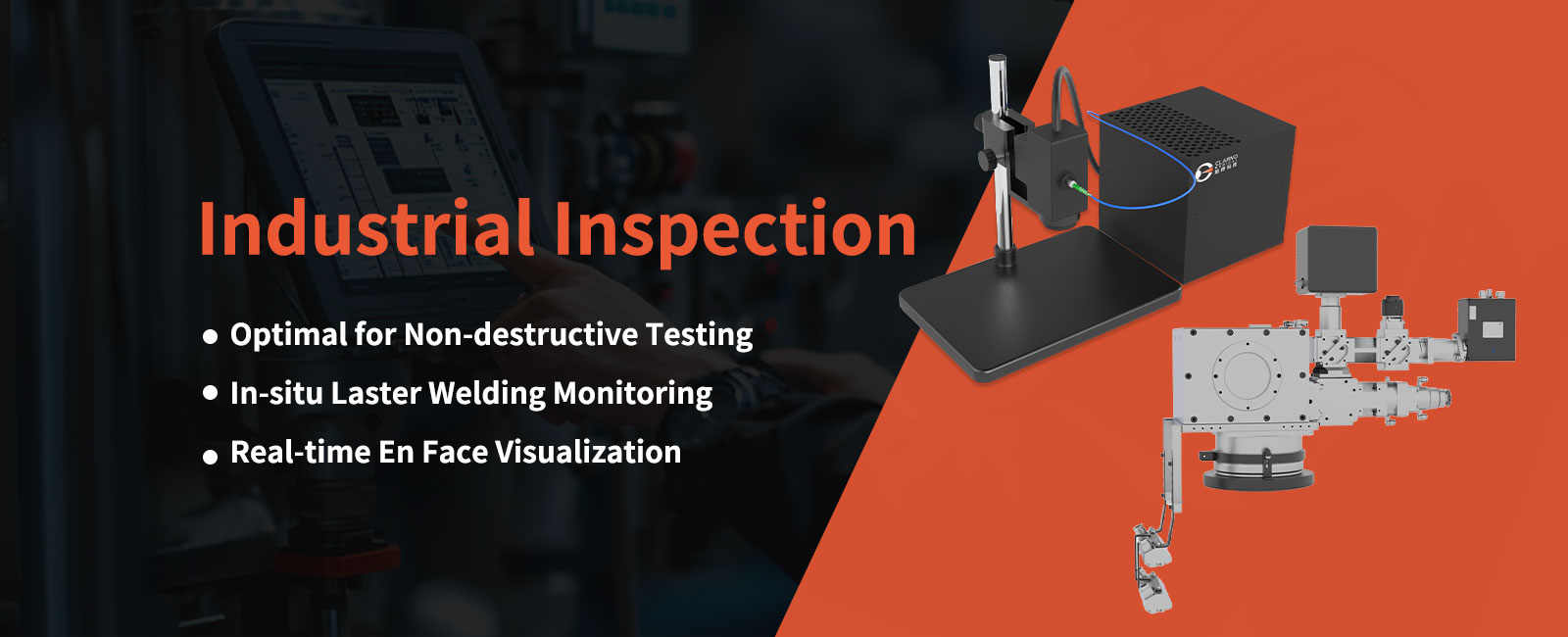
Industrial Inspection
Industrial inspection OCT equipment is dedicated to the non-destructive testing of the internal microstructure of materials and devices. It is suitable for internal defect detection, layer thickness measurement and quality control of transparent or translucent materials and precision components.

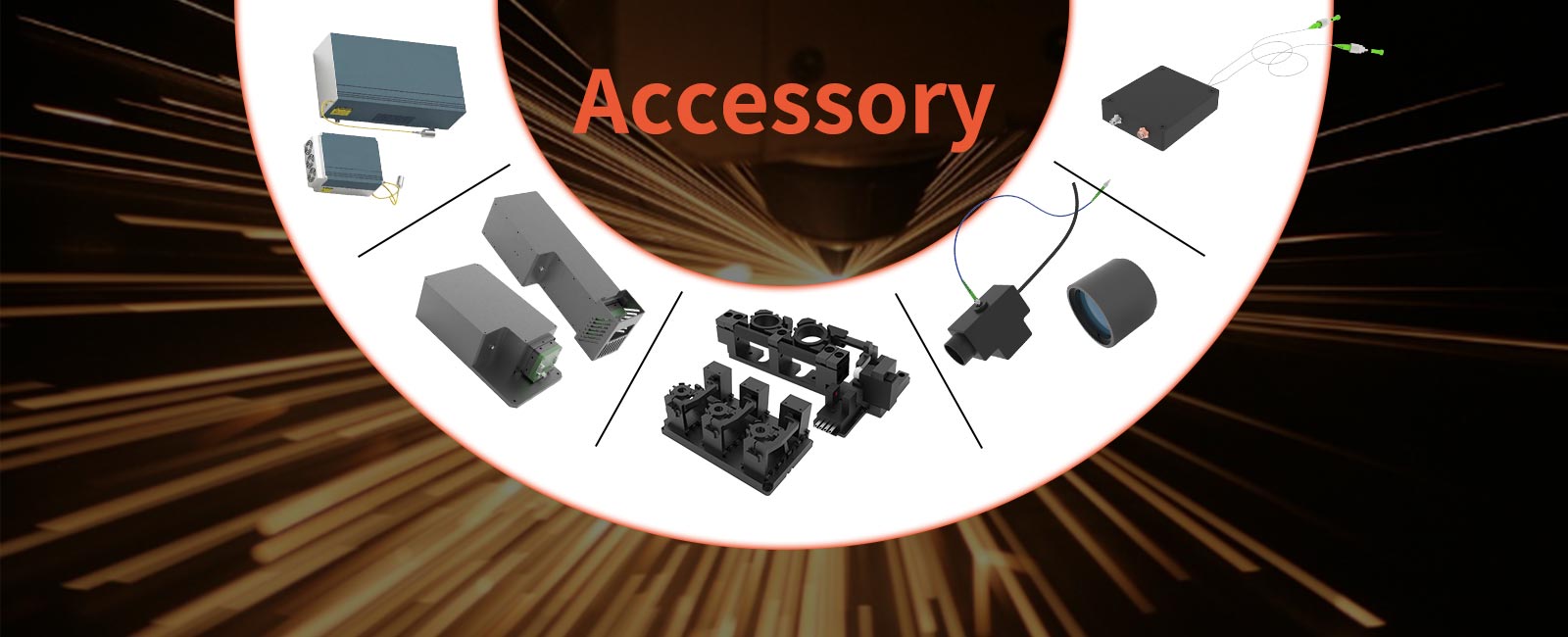
OCT Accessory
Our company develops a variety of OCT accessories, including Motorized Fiber Polarization Controllers, OCT Balanced Detector, Variable Optical Delay Line,OCT Scanner,OCT Spectrometer Series,etc. We rely on innovative R&D to meet the efficiency needs of enterprises.
Equipment
Dermatologic OCT
- Non-invasive imaging
- Applicable to multiple conditions
- Clear Blood-Flow Imaging
Industrial OCT
- Real-time en face visualization
- Optimal for non-destructive testing
- In-situ laster welding monitoring
OCT for Laser Welding
- Preweld surface inspection for seam positioning and defect detection
- In-weld penetration depth monitoring with real-time keyhole measurement
- Post-weld 3D topography scanning for weld bead morphology assessment
Accessory
Stream Supercontinnum Source
- Spectral range: 400 nm – 2400 nm
- Higher hyperspectral brightness, lower noise
- Multi-pulse width, Frequency-adjustable
OCT Spectrometer Series
- Multiple models available
- High sensitivity and signal-to-noise ratio
- High-quality OCT/OCTA in vivo biological images
Motorized Fiber Polarization Controllers
- Conversion between linear, circular and elliptical polarization state
- 2 paddle version
- 3 paddle version
Variable Optical Delay Line
- Operating wavelength: 840 nm – 1310nm
- Optical delay time:670ps / 1470 ps / 2000 ps /4000 ps
Minimum delay variation: 33 fs /0.67 fs
OCT Scanner
Flat image plane
Large field of view
Low F-Theta distortion
Ideal for DlY OCT or confocal systems
OCT Balanced Detector
- Wavelength range: 900 nm – 1700 nm
- Bandwidth up to 2.5 GHz
- High common-mode rejection ratio (CM-RR)>25dB
Fiber Mach-Zehnder Type Interferometer(MZI)
- Precision timing synchronisation for OCT scanning sources
- Compact design for OEM subassembly integration
- Multiple wavelength options for flexible system compatibility
OCT Fiber Interferometer
- Expert-Led Assembly Technology
- Top-Tier Optical Path Length Matching
- Polarisation State Stability
Spectroscopy
Raman Spectrometer
- Non-destructive testing, suitable for various materials
- Rapid acquisition of sample spectral information
- High sensitivity, capable of detecting trace samples
Principles of OCT
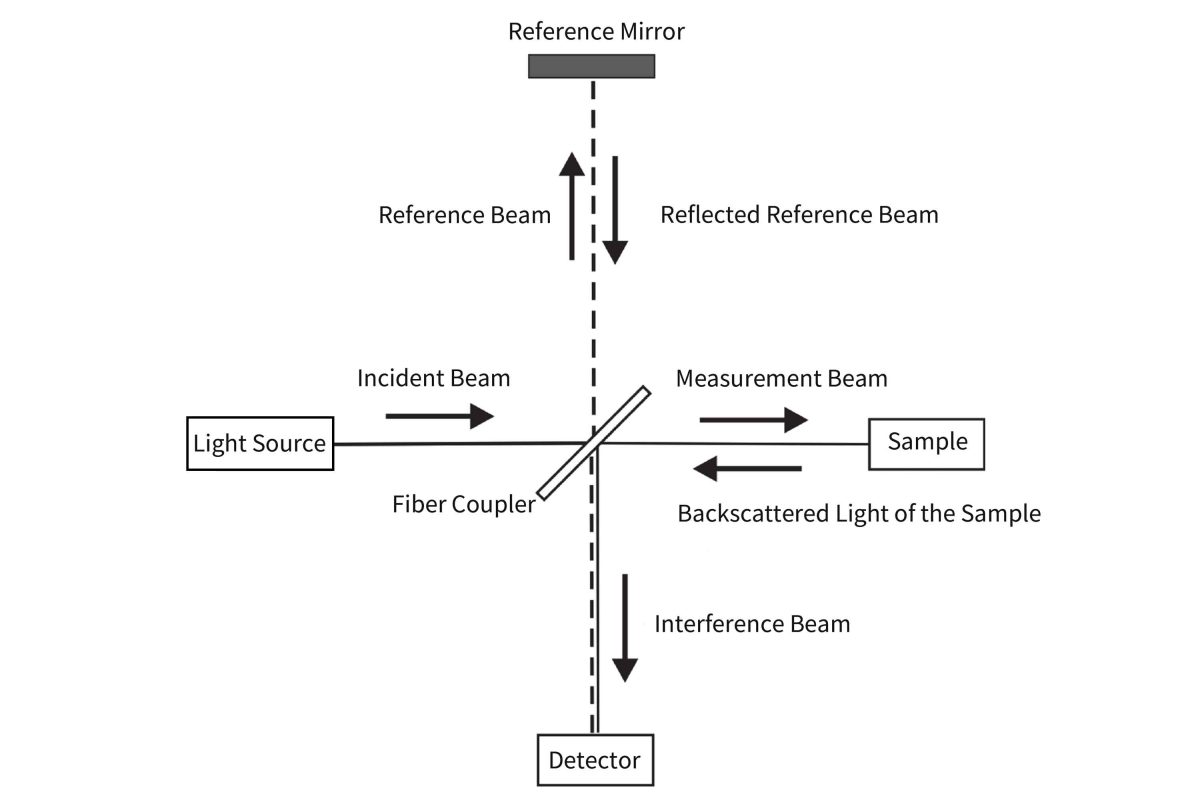
Optical Coherence Tomography (OCT) is an advanced imaging technology based on low-coherence optical interferometry. Light from a broadband source is divided into two paths: a sample beam, which illuminates the target and undergoes backscattering within the tissue or material, and a reference beam, which reflectsfrom a fixed reference mirror. The two beams are then recombined to produce aninterference signal.
Interference occurs only when the optical path difference between the sample and reference arms lies within the coherence length of the light source. By analyzing changes in this interference signal as the optical path length varies, OCT extracts depth-resolved structural information. This enables high-resolution cross-sec-tional (2D) and volumetric (3D) imaging of internal microstructures – non-invasively and in real time.
Learn More
-SS-OCT System Configuration
-SD-OCT System Configuration
-Exhibition Updates
-Company News
-About Us & Corporate Culture
-Corporate Honors & Partners
-Contact Information
-Company Address